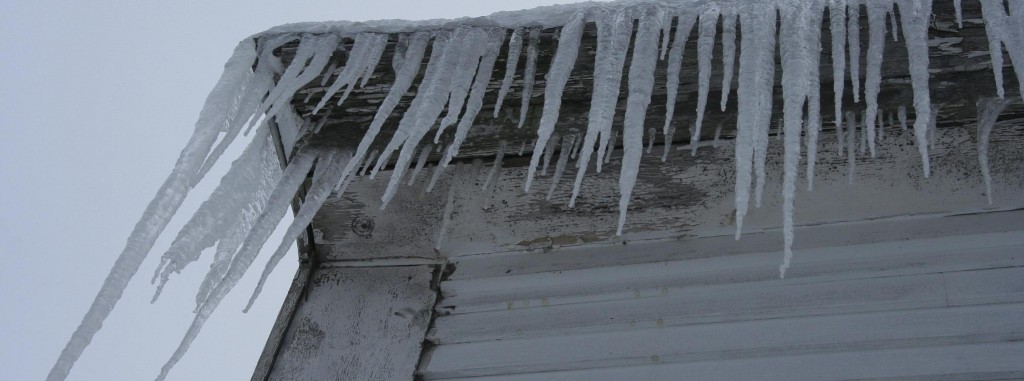
Yikes!
If you’ve ever been to Ann Arbor in the winter, you have likely seen ice dams build up on the edge of some buildings. The icicles that form can be gorgeous, but 4 foot long sabers of death really don’t appeal to me.
Seeing that this winter has been a particularly harsh winter, in light of the amount of snow and length of ridiculously cold weather recently, my broker sent out an email highlighting the phenomena of ice dams.
Check out the info after the jump:
| CHECK FOR ICE DAMS
Some are worse than others, but most winters create conditions that are ideal for ice dams. Melting snow on the upper portion of the roof refreezes at the bottom. |
| WHEN |
When there is snow on the roof and the temperature is a few degrees below freezing. |
| WHY |
Ice dams will cause a perfectly good roof to leak. Considerable damage can occur to interior finishes. Concealed damage also can occur within exterior walls.

|
|
 |
|
| HOW |
Heat escaping from the house raises the temperature in the attic. This melts the snow on the upper portion of the roof. The melted snow re-freezes when it runs down to the cold eave area, where there is no heat loss from the house. Ice builds up at the eaves and traps subsequent water running down the roof. The water backs up under the shingles causing leakage. |
| |
The best solutions include increasing attic insulation and ventilation. This will reduce the temperature in the attic so the snow on the roof does not melt. Of equal or greater importance, is the reduction of warm air escaping from the heated portion of your house, into the attic. Air leakage past the attic access hatch, recessed lights, plumbing stacks and chimneys must be stopped. (There are companies that specialize in air sealing.)

|
| |
When re-roofing, a waterproof membrane can be laid along the lower edge of the roof. This is called eave protection. It will not stop ice dams — but it will prevent the subsequent leaking.

|
TIPS

|
| |
Ice dams are more common on:
- low sloped roofs
- roofs which change slope near the eaves
- roofs with large overhangs (wide soffits)
- roofs above heated spaces that extend out over unheated areas such as porches
|
| |
| |
Electric heating cables can be installed along the eaves to prevent ice dams; however they are only effective if they are turned on before snow and ice accumulate. Ironically, these cables can provide more opportunity for leakage because they have to be secured through the roof covering.
[photo credit]
|
|
|




Hey Todd, a few more suggestions about ice dams:
1. Clean your gutters. If you don’t have leaves in your gutters, you get a few more inches of room for the ice to go.
2. Get a roof rake for the snow. Here’s one made in the UP:
http://www.silverbear.biz/products/roofrake/index.html
The idea is that you clear the snow off before it melts, avoiding the ice build up entirely.